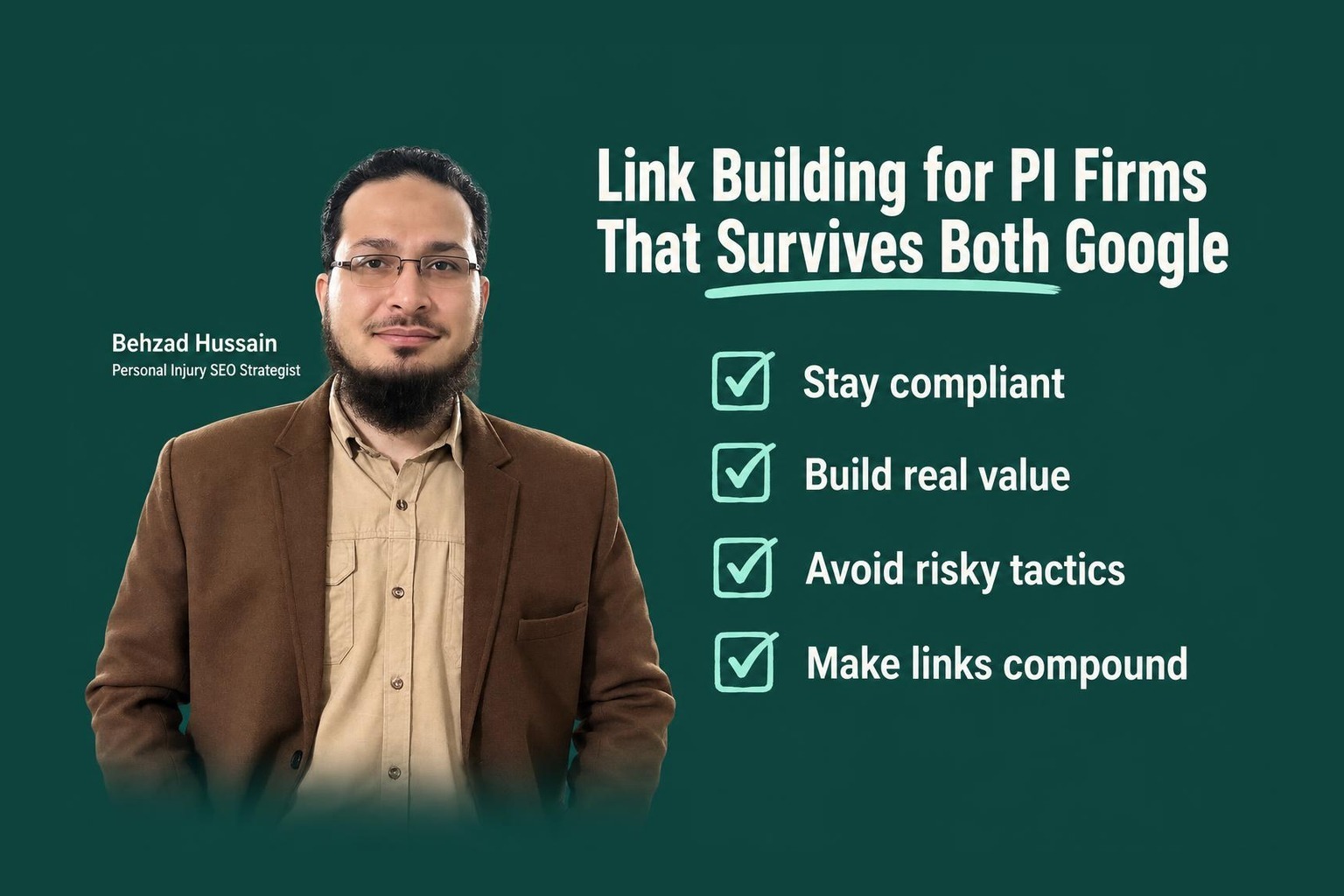
Link building is the part of SEO where personal injury firms carry a risk no plumber ever faces: the tactics a vendor calls aggressive, a bar association can call something worse. The discipline is also genuinely valuable, which is why it refuses to die, and genuinely misunderstood, which is why most PI link budgets buy either nothing or liability. This piece separates the link building that compounds from the kind that confesses, using what the machinery actually reads and the boundaries a regulated profession actually has.
What a link is to the machine
Strip the industry mythology and a link is testimony: one site, with its own standing, saying something about another. The machinery reads three layers of that testimony.
Who is speaking: the linking site's own authority and its topical standing. The oldest architecture in search made every link a weighted vote, and the weighting has only grown more contextual since.
What they say: the anchor and its surroundings. Google patented using anchor text with hyperlink structures for search, US 8380722, and generating result descriptions from anchor text, the US 2012102020 family: the words around a link teach the system what the destination IS. Testimony is not just the vote; it is the wording of the vote.
And whether the testimony is plausible: patterns across all of it. A small firm in one city acquiring dozens of identical-anchor links from unrelated sites in a month is not a popularity event. It is a signature, and the systems have been trained on that signature for two decades.
Read those three layers together and the strategy writes itself: links are worth acquiring where a real source, with real relevant standing, says something true about the firm in natural words. Everything else is either noise or risk, and the industry sells both at volume because both are easier to manufacture than the real thing.
The bar-shaped boundary nobody briefs the vendor on
Here is the conversation most link vendors have never had: lawyer advertising rules apply to marketing statements wherever they appear, and several common link tactics manufacture statements.
A paid placement praising the firm as a top choice is a compensated endorsement wearing an editorial costume. Guest posts under invented bylines put words in mouths that do not exist. Fake-looking "best lawyer" pages built purely to house links make claims no one can substantiate. Whether any specific tactic crosses a specific state's line is a question for your own rules and your own counsel, and that is precisely the point: the vendor selling you guaranteed placements at volume has never asked that question, and the firm's name is the one on the result.
The practical screen is simple and clarifying: would you be comfortable if opposing counsel read your backlink profile aloud, with sources and payment trails, in front of your bar? Links that pass that reading are assets. Links that need the lights off are liabilities with anchor text.
What actually earns links for a PI firm
The honest inventory is shorter than the industry pretends, and all of it is doable.
Be the source for something real. Original local data, a genuinely useful public resource, the definitive explanation of a state-specific rule: things journalists, bloggers, and institutions reference because referencing them makes their own work better. My own experience is blunt here: published research earns citations for years with no outreach at all, because it is the only thing in the niche that answers a question nobody else counted.
Earn the coverage your cases and community work already justify. Firms do newsworthy things constantly, results within advertising rules, scholarships, community programs, expert commentary on local safety issues, and never tell anyone with a publication. Digital PR for a law firm is mostly the discipline of noticing your own news and offering it to the people whose job is covering it.
Fix the citations layer: the directories and local records that already mention the firm, made accurate and consistent. Not glamorous, rarely a ranking rocket, but it is the corroboration bed every other mention sits on, and inconsistency there taxes everything above it.
And let the attorneys be people in public: bar associations, panels, publications, interviews. People link to people. A named attorney with real standing accumulates testimony a brand account never will, which is the link-building face of the authorship layer this series keeps returning to.
What to refuse, regardless of the deck
The refusal list is where the budget is saved. Volume packages promising links per month at a price per unit: testimony for sale is the exact pattern the machinery discounts and the signature it hunts. Anchor-text orders, where the vendor asks which keywords the links should say: natural testimony does not take dictation, and footprints are forever. Networks of sites that exist to link, however privately owned and however renamed this year. And reciprocal schemes among firms, which combine the footprint problem with the referral-ethics questions the profession already knows to ask.
One honest nuance, because dogma helps nobody: not every paid placement is poison. Sponsorships of real organizations, with real audiences, disclosed properly, are community presence that happens to include a link. The line is not payment; it is pretense. Disclosed support of a real thing passes the opposing-counsel test. Rented editorial praise does not.
The toxic-links panic, priced honestly
A word on the fear product, because it funds a meaningful share of this industry. The pitch arrives as a scan: your site has hundreds of toxic links, here is the red dashboard, buy the cleanup. The honest mechanics are duller. Every site of any age accumulates junk links it never asked for, scrapers, spam directories, bot-generated pages, because that is what the web's sediment looks like, and the scoring systems were built knowing it. Testimony from a source with no standing is mostly ignored, not punished; if random spam links could sink a site, the sabotage industry would be bigger than the marketing one. The dashboards labeling links toxic are applying a vendor's invented metric, not Google's, and the standard remedy they sell, mass disavowal, is a tool for the narrow case of a firm cleaning up after its own past manipulation, not a hygiene ritual for sites that never bought links in the first place. The screen from earlier applies here too, inverted: links you never sought, from sources with no standing, making no claims on your behalf, are not your testimony and not your liability. Spend the cleanup budget on earning one real citation instead; it will do more than deleting a thousand imaginary threats.
The testimony you own: internal links
One source of link value never appears in any vendor deck because nobody can sell it to you: your own site. Internal links are testimony too, the one kind written entirely by the firm, and the machinery reads their anchors and structure the same way it reads everyone else's. Most PI sites waste the asset twice over: navigation menus that link everything to everything, diluting any statement of priority, and in-content links so rare that the site's strongest pages sit unconnected from the pages that could feed them standing. The discipline costs nothing but intent: let every substantive page link forward to the one or two pages it genuinely supports, in anchors that say what the destination is in a reader's words, and let the site's hierarchy concentrate attention on the pages that sign cases. External testimony you request; internal testimony you simply decide. A firm that has never organized the second has no business buying the first.
The audit and the cadence
The quarterly hour: pull the firm's new links, read the top sources as a skeptic, and grade each against two questions: would this testimony survive being read aloud, and does the source have any real standing on anything related to law, the locale, or the community? Then check the anchors for unnatural ordering patterns, the tell of someone, past vendor or present, taking dictation.
The forward cadence is quarterly too, because link building is a slow asset class: one real earnable thing per quarter, a resource, a dataset, a story offered to local press, plus the standing habits, the citations kept clean, the attorneys visible. Firms want a links program that behaves like a media buy. The compounding version behaves like a reputation: slowly, with receipts.
Links live in the third pillar of my framework, Authority Reinforcement, and my free PI Authority Scorecard asks its version of the opposing-counsel question in 90 seconds, among the other fifteen. The full off-page guide, bar boundaries included, is free at behzadhussain.me with the research at behzadhussain.me
Build the testimony you would be proud to have read aloud. The machines are listening for exactly that, the bar never objects to it, and it is the only kind that still works in ten years. Everything else on the market is renting the appearance of a reputation, and rented reputations have a way of presenting their bill at the worst possible moment.